
Best Exhaust Systems for Silverado 1500: Sound, Fitment, and Drone Control
The best exhaust system for a Silverado 1500 is the one that fits your exact cab, bed, engine, wheelbase, and sound tolerance. That sounds obvious until you start shopping. A system that fits a 2014-2018 5.3L Crew Cab short bed may not fit a newer body style, a regular cab, a long bed, or a different factory exit layout.
Sound matters too. Silverado V8s can make a deep, clean tone with the right cat-back. They can also drone when Active Fuel Management or Dynamic Fuel Management changes how the engine is firing at light throttle. If this is your daily driver, tow rig, or family truck, do not buy by cold-start videos alone.
Key Takeaways
- Start with fitment: model year, engine, cab, bed, wheelbase, 2WD or 4WD, and factory exit layout all matter.
- AFM and DFM can make loud exhausts sound uneven or boomy in light-throttle cruising.
- Mandrel-bent tubing keeps the pipe diameter more consistent through bends than crush-bent tubing.
- 304 stainless steel is the premium corrosion-resistance choice; 409 stainless steel is common and practical on truck exhausts.
- Stay downstream of emissions-critical parts on street trucks, and do not remove catalytic converters or oxygen sensors.
Quick Picks
TruckPowerUp may earn a commission from qualifying purchases. These are research-based starting points, not hands-on test rankings. Always confirm fitment with your exact Silverado before ordering.
| Pick | Best For | Main Tradeoff |
|---|---|---|
| Borla 140537 ATAK Cat-Back | Premium 304 stainless sound and fitment | Loud and expensive |
| MBRP S5085AL Armor Lite | Budget single-side cat-back shopping | Aluminized steel is less corrosion-resistant than stainless |
| Flowmaster 817669 American Thunder | Classic chambered dual-exit truck sound | More exterior bark than a quiet commuter may want |
| Dynomax 39311 Ultra Flo | Lower-resonance straight-through tone | Older fitment range and louder-than-stock character |
Pre-Checks Before You Buy
Do this before comparing tips, sound clips, or brand names:
| Check | Why It Matters |
|---|---|
| Body generation | 2019 Silverado 1500 LD/Classic fitment is not the same as the new-body 2019 Silverado |
| Engine | 4.3L, 5.3L, and 6.2L listings can differ |
| Cab and bed | Crew Cab short bed, Double Cab standard bed, and regular cab trucks use different tube lengths |
| Wheelbase | Many exhaust pages specify wheelbase, not just cab name |
| Exit style | Rear exit, side exit, dual exit, and single exit kits do not all use the same routing |
| Rust condition | Rotten clamps and factory pipes can turn a simple bolt-on job into cutting and repair |
| Sound rules | A loud cold start can be a neighborhood problem even if the system bolts up cleanly |
For a normal cat-back swap, the practical line is simple: work behind the catalytic converters and leave emissions hardware alone. EPA guidance is broader than pickup exhaust shopping, but it is a useful reminder not to turn a sound upgrade into an emissions delete: EPA aftermarket defeat device guidance.
Borla 140537 ATAK Cat-Back
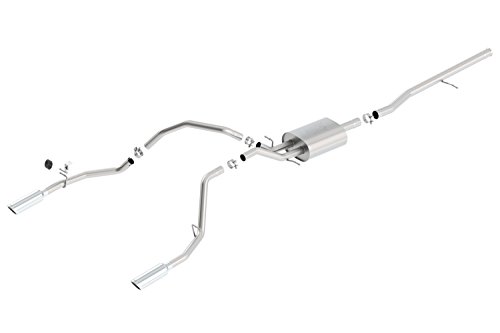
Borla 140537 ATAK Cat-Back Exhaust
Best for: Silverado owners who want a premium stainless cat-back and an aggressive exhaust note.
- • Cat-back exhaust system
- • ATAK sound level
- • T-304 stainless steel
- • 4-inch bright chrome tips on compatible trucks
- • Million-mile warranty
Why it makes sense: Borla’s current listing identifies part 140537 as an ATAK cat-back system for 2014-2018 Chevrolet Silverado 1500/GMC Sierra 1500 and 2019 Silverado/Sierra LD-only trucks with the 5.3L V8, specific cab/bed combinations, and a 143.5-inch wheelbase: Borla 140537 fitment.
What to know: This is the loud Borla personality. The same Borla page describes T-304 stainless construction, mandrel bends, 4-inch bright chrome tips, and the company’s million-mile warranty. That is the upside. The tradeoff is price and volume.
Watch-outs: If you tow, drive long highway trips, or leave early in the morning, be honest about whether ATAK is fun or too much. Borla’s milder sound levels may make more sense for a family truck.
MBRP S5085AL Armor Lite
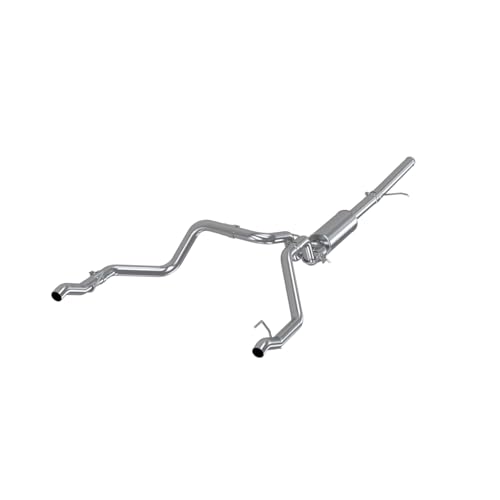
MBRP S5085AL Armor Lite Cat-Back
Best for: owners who want a full cat-back shape without paying premium 304-stainless money.
- • Cat-back exhaust concept
- • Single side exit
- • Aluminized steel Armor Lite positioning
- • Budget-minded alternative to premium stainless
Why it makes sense: The useful point here is budget material choice. Aluminized steel can make sense in dry climates, on lower-cost builds, or when the truck is not expected to live through years of salted winter roads.
What to know: This is the value tradeoff. You usually give up some long-term corrosion resistance compared with 304 stainless steel. If the truck sees road salt, mud, boat ramps, or year-round work use, stainless may be cheaper over the long haul.
Watch-outs: Do not treat any MBRP listing as universal because it says Silverado 1500. Match the exact part number to the truck’s cab, bed, engine, and exit layout.
Flowmaster 817669 American Thunder

Flowmaster 817669 American Thunder Cat-Back
Best for: Silverado owners who want the classic chambered Flowmaster sound and dual-exit styling.
- • Cat-back exhaust system
- • American Thunder series
- • Super 40 chambered muffler
- • Dual rear or side exit layout
- • 409 stainless steel tubing
Why it makes sense: Holley’s current Flowmaster listing for part 817669 describes it as an American Thunder cat-back for 2014-2019 Classic-body GM Silverado/Sierra 1500 trucks with 4.3L and 5.3L engines, tuned for aggressive exterior sound with a more moderate interior tone: Flowmaster 817669.
What to know: The product page lists stainless mandrel-bent tubing, a Super 40 series muffler, dual 2.50-inch stainless tailpipes, 3.50-inch polished stainless tips, factory hanger locations, and included installation hardware.
Watch-outs: Chambered sound has a personality. If you already know you like Flowmaster tone, this is the familiar lane. If you are trying to keep the cab quiet on long trips, listen for steady-state cruise clips before buying.
Dynomax 39311 Ultra Flo

Dynomax 39311 Ultra Flo Cat-Back
Best for: older Silverado owners who want a freer-flowing single-exit system and a less chambered sound character.
- • Cat-back exhaust system
- • Ultra Flo straight-through muffler style
- • Single exit
- • Verify current application carefully
Why it makes sense: The strongest reason to compare this style is resonance control. A straight-through muffler with packing material can sound different from a chambered muffler, and some owners prefer that smoother character.
What to know: This is not the first pick for every modern Silverado. It belongs in the comparison because it covers a different use case: older-truck fitment and a tone that is not chasing the sharpest, loudest cold start.
Watch-outs: Before ordering, confirm the application from the seller or manufacturer lookup. Older part numbers can remain available long after fitment data gets messy across retailer catalogs.
AFM, DFM, and Silverado Drone
Active Fuel Management and Dynamic Fuel Management can make exhaust shopping trickier on Silverado V8s. When the engine changes cylinder operation under light load, the exhaust note can change too. A stock muffler hides much of that. A loud aftermarket system may make it obvious.
That is why “no drone” is such a loaded claim. Drone depends on the truck, the exhaust, the cab, tire size, axle ratio, cruising speed, load, and how often the engine is switching modes. A system can sound great under throttle and still boom in the cab at 1,500 to 2,000 rpm.
If you tow, commute, or carry passengers, lean toward a more controlled system. If the truck is mostly a weekend cruiser and you know you like loud exhausts, an aggressive cat-back is easier to justify.
Mandrel Bends vs. Crush Bends
Mandrel bending is worth understanding before you compare cat-back systems.
Mandrel-bent tubing keeps the pipe’s inside diameter more consistent through bends. Crush-bent tubing can narrow through curves, especially in tight routing. On a pickup exhaust, that consistency matters because exhaust does not travel through a perfectly straight pipe. It has to route around crossmembers, suspension, the axle, the spare tire area, and bumper exits.
Do not overthink this into race-car math. For a street Silverado, the practical takeaway is simple: a well-built cat-back with smooth bends, aligned hangers, and good clamps is more likely to fit cleanly and flow consistently than a cheap system with sloppy bends.
304 vs. 409 vs. Aluminized Steel
Material choice is where budget and climate meet.
304 stainless steel costs more but resists corrosion better. It is the premium choice if the truck sees salted roads, coastal air, or long-term ownership.
409 stainless steel is common in truck exhaust systems. It handles exhaust heat cycles well and costs less than 304. It can show surface discoloration or light surface rust without being structurally failed.
Aluminized steel is the budget route. It can be fine in dry climates or for a truck you do not plan to keep forever. It is less attractive for salty winters, muddy work use, or a truck that lives outside year-round.
Fitment Reference
When a listing says “Silverado 1500,” keep reading. Exhaust kits often split like this:
| Fitment Detail | What To Verify |
|---|---|
| Model year | 2014-2018, 2019 LD/Classic, and 2019+ new-body trucks are not interchangeable |
| Engine | 4.3L V6, 5.3L V8, 6.2L V8, and newer turbo engines can use different parts |
| Cab | Regular Cab, Double Cab, and Crew Cab affect pipe length |
| Bed | Short, standard, and long beds change the wheelbase and routing |
| Drivetrain | Some systems list 2WD, 4WD, or both |
| Factory bumper | Through-bumper tip exits and under-bumper exits are different layouts |
If your truck has a lift, aftermarket bumper, spare tire relocation, rear helper springs, or previous exhaust work, check clearance before assuming the kit will sit exactly like the product photos.
Installation Notes
Most cat-back exhaust jobs are bolt-on in theory. Rust is what changes the plan.
| Step | Why It Helps |
|---|---|
| Spray clamp and hanger areas ahead of time | Road salt and heat cycles can seize old hardware |
| Support the old exhaust before loosening hangers | A long factory pipe can shift suddenly |
| Test-fit every section loosely | Lets you align tips before final tightening |
| Set bumper-tip spacing before torqueing clamps | Prevents crooked or melted-looking exits |
| Recheck after heat cycles | Clamps can settle after the first few drives |
Use jack stands or a lift. Do not get under a truck supported only by a jack.
FAQ
What is the best exhaust for a Silverado 1500?
For premium stainless sound, Borla 140537 is the strongest pick if it matches your truck. For classic chambered dual-exit sound, Flowmaster 817669 is the familiar option. For budget shopping, compare MBRP-style aluminized systems only after deciding whether your climate makes aluminized steel acceptable.
Will a cat-back exhaust add horsepower?
It can reduce restriction and change throttle feel, but sound is usually the most obvious change on a stock Silverado. Do not buy a cat-back expecting a huge horsepower gain by itself.
Why does my Silverado exhaust drone in V4 mode?
When AFM or DFM changes cylinder operation at light throttle, a louder exhaust can make that operating mode more noticeable. Cabin resonance can turn it into a low-frequency boom at steady speed.
Is 304 stainless worth it?
It is most worth it in salty, wet, coastal, or long-term ownership situations. If the truck lives in a dry climate and budget matters most, 409 stainless or aluminized steel may be practical.
Is a cat-back exhaust emissions legal?
A cat-back usually stays behind emissions-critical parts, but legality still depends on location, sound rules, and the exact product. Do not remove catalytic converters, oxygen sensors, or required emissions equipment on a street truck.
More Featured Guides

Best Exhaust Systems for Ram 1500 Hemi: Sound, Fitment, and Stainless Steel
A practical Ram 1500 Hemi exhaust guide covering cat-back systems, direct-fit mufflers, 304 vs 409 stainless steel, drone, MDS, and fitment checks.
Read Guide
Best 120V Electric Garage Heaters: Spot Heat, Circuit Limits, and Safe Picks
A practical 120V electric garage heater guide covering 1500W limits, 15A circuits, spot heating, infrared vs fan-forced heat, safety checks, and product examples.
Read Guide
Best Jump Starters for Diesel Trucks: Amps, Cold Weather, and Safe Picks
A practical diesel jump starter guide covering peak amps, cranking amps, lithium vs lead-acid packs, charging habits, and researched product examples for pickup owners.
Read GuideKelley Crush
Kelley is a mechanical engineer and a truck enthusiast. He's currently an F-250 guy, but he promises to respect any well-equipped and properly utilized truck.