
4 High vs 4 Low vs Auto 4WD: Which Mode Should You Use in Snow and Ice?
Key Takeaways
- Use Auto 4WD (4A) when winter roads switch back and forth between bare asphalt, slush, and patchy ice. Its internal clutch pack slips during tight turns so your driveline will not bind on dry pavement.
- Lock into 4 High (4H) only when the road is continuously covered in snow or ice. Because part-time 4H forces the front and rear driveshafts to rotate at the identical speed, driving it on high-traction pavement causes severe driveline binding and component wear.
- Reserve 4 Low (4L) for crawling out of deep snowdrifts, climbing steep slick grades at walking pace, or unsticking a buried truck. Never use 4L for normal road travel or high-speed driving.
- Four-wheel drive only delivers forward pulling power; it does not shorten your braking distance or help you steer on ice. Braking and cornering grip depend mostly on the tires.
Staring at the 4WD selector knob at the end of the driveway when the road turns to slush is an easy way to second-guess yourself. Modern trucks give you a whole lineup of settings like 2H, 4A, 4H, 4L, or 4WD LOCK, and picking the wrong one shows up immediately. You either end up spinning the rear tires when you pull away from a snow-covered stop sign, or you get sudden driveline shudder because the truck is bound up on clearing asphalt.
How your transfer case behaves on snow comes down to factory shift rules and what is happening under the tires, so knowing the settings before you leave the driveway saves you from guessing once you hit traffic.
What your transfer case is doing in 2H, Auto, 4H, and 4L
Your transfer case bolts up right behind the transmission, and its main job is splitting engine torque between the rear driveshaft and the front axle. How it handles that split tells you everything about where a mode belongs, because some settings need tire slip on loose powder while others can tolerate wet pavement without binding up the gears.
In two-wheel drive high (2H), the transfer case sends every bit of torque back to the rear axle. That is where the truck wants to live on bare roads, but an empty pickup bed has very little weight over the axle, so pulling out from a snow-packed stop can easily just spin the rear tires.
Automatic four-wheel drive (labeled 4A, 4WD AUTO, or AUTO depending on your truck’s badge) solves this cornering problem by ditching the solid mechanical lock. Systems like the BorgWarner 4417 used on the F-150 (per Transmission Digest) use a clutch pack inside the case. The truck runs rear-biased during steady cruising, and when the system sees a wheel-speed difference, it engages the clutch pack to send torque to the front wheels. Because the clutch can modulate pressure and slip slightly when you crank the steering wheel into a parking space, 4A does not suffer from driveline bind on bare pavement patches.
Four-wheel drive low (4L) engages a secondary planetary gear reduction set inside the transfer case. According to the 2024 Ram 1500 Owner’s Manual, engine speed in 4L is roughly three times the engine rpm of 4H at identical road speeds. That extra gear reduction delivers heavy wheel torque at a crawl, but it takes away any ability to drive at normal road speeds.
To tell which system you have, read the knob, buttons, or screen. 4A, 4WD AUTO, or AUTO means on-demand, and only 2H, 4H, and 4L means part-time; confirm it in the 4WD section of your owner’s manual. If you run a Super Duty or older truck with front hubs, both hub dials must be set to the same position, per the 2022 Ford Super Duty owner’s manual. Four-wheel drive also needs four tires of equal size, type, and circumference, per the 2024 Ram 1500 Owner’s Manual. A mismatch causes binding in part-time 4H and can confuse an Auto 4WD computer into thinking a wheel is slipping. For sizing and load range, check our tire basics guide.
If this road condition happens, then do this with your transfer case
Matching the setting to whatever is sitting under your tires keeps expensive drivetrain parts from taking shock loads they were never built to handle. A quick look at what the road is doing tells you what to choose before you shift into gear.
| If this road condition happens | Then do this with your transfer case |
|---|---|
| Part-time 4WD only (no Auto setting), and the road alternates between bare wet pavement and snowy patches | Stay in 2H on clear pavement, and shift into 4H only when the road surface remains slick. If bare asphalt sections are long, keep it in 2H to avoid mechanical binding. |
| Your truck has Auto (4A / 4WD AUTO) and conditions are mixed or changing | Shift into Auto. Ford, Ram, and GM manuals specifically designate this mode for variable road surfaces, as its internal clutch slips during turns on bare asphalt. |
| The road is continuously snow-covered, hard-packed, or icy at steady speeds | Shift into 4H. Ford, GM, and Toyota recommend 4H for snow-packed travel. Slow your vehicle down, because four-wheel drive provides forward pull rather than stopping power. |
| Glare ice covers the highway at driving speed | Drive slowly in 4H or Auto, but do not rely on the transfer case to keep you on the road. Braking and steering depend entirely on tire traction. Increase your following distance significantly. |
| You are stuck in deep snow, or crawling up a steep, slick incline | Shift into 4L. Slow to a crawl or stop, put the transmission in Neutral, select 4L, and wait for the indicator light to stop flashing. Respect the 4L speed cap (Ram 25 mph, GM 45 mph). On Ford, GM, and Toyota, 4L turns off stability control. |
| Plowing snow with the truck | Shift into 4HI. The Chevrolet Silverado manual specifically names 4HI for plowing operations. For other makes, verify recommendations in your factory snowplow supplement. |
| Towing a trailer up a slippery winter grade | Use 4H to maintain steady forward pulling without spinning the drive wheels. Only drop into 4L if the climb requires walking speeds below the low-range speed limit. Load and inflation for that trailer are covered in our guide on tire pressure for towing and hauling. |
| Tire chains are installed on the truck | Select 4H or follow specific transfer-case guidance in your manual. Chain placement and speed are covered in our guide on snow chains for 4x4 trucks. |
| Driving with a dissimilar full-size spare tire on a Ford truck | Ford’s 2022 F-150 and Super Duty manuals say not to exceed 50 mph with 4WD engaged, to engage 4WD only while stopped, and never to use 4WD on dry pavement. |
| The road clears up and you hit continuous dry pavement | Shift immediately back into 2H (or Auto). Continuing in locked 4H causes driveline wind-up, heavy steering, tire scuffing, and mechanical strain. |
| Drive wheels are actively spinning on ice | Do not move the 4WD selector knob. Ford, Ram, and Toyota manuals instruct drivers to let off the throttle and stop all wheel spin before shifting modes. |
Comparing drive modes across winter driving surfaces
Every transfer case setting trades mechanical grip against driveline strain. Seeing how 2H and Auto 4WD behave across real-world winter roads helps you keep forward traction without beating up your front end or getting stuck at an intersection.
| Driving Condition | 2H (Two-Wheel Drive) | Auto / 4A (On-Demand 4WD) |
|---|---|---|
| Dry pavement | Yes. Standard default mode. | Yes. Ford’s 2014 F-150 manual and Ram’s 2016 1500 manual allow it on dry roads. |
| Wet pavement without snow | Yes. Normal driving mode. | Yes. Provides extra pull from a stop on slick intersections. |
| Packed snow | Acceptable only if your tires have adequate grip. | Yes. Sends torque forward when the rear slips. |
| Patchy ice and mixed pavement | Drive cautiously; prone to rear wheel spin. | Best mode. Adjusts to changing surfaces without binding. |
| Deep unplowed snow | High risk of getting stuck. | Usable, but locked 4H provides more dependable pull. |
| Steep, slick climbs at low speed | Poor choice; rear tires will break loose. | Possible, but 4L is the tool for a slow, slick climb. |
| Highway speed on winter roads | Tires decide your grip. | Yes. Safe for variable surfaces at moderate speeds. |
Once the weather gets worse, deciding between locked 4H and low-range 4L really comes down to your road speed and how much snow you have to push out of the way.
| Driving Condition | 4H (Four-Wheel Drive High) | 4L (Four-Wheel Drive Low) |
|---|---|---|
| Dry pavement | No. Every manual checked here warns against it. | No. Severe driveline binding will occur. |
| Wet pavement without snow | No. Wet asphalt still provides too much grip for locked cases. | No. Never engage on pavement. |
| Packed snow | Yes. Keeps both axles pulling steadily. | Only at a crawl. |
| Patchy ice and mixed pavement | No, unless the surface remains predominantly slick. | No. Driveline will bind on bare spots. |
| Deep unplowed snow | Yes. Standard mode for pushing through heavy accumulation. | Yes. Use if forward progress stalls or the truck bogs down. |
| Steep, slick climbs at low speed | Possible, but 4L is the tool for a slow, slick climb. | Yes. This is the job low range is built for. |
| Highway speed on winter roads | Yes, on continuous snow, but keep speeds reasonable. | No. Strictly limited to crawling speeds under factory caps. |
How Ford, GM, Ram, and Toyota manuals tell you to shift
When the shift conditions aren’t met, the case simply doesn’t shift: Ford’s display walks you through the procedure, and on a 2022 Ram HD the selected light keeps flashing until you meet the requirements.
You can usually flip between two-wheel drive and four-wheel drive high while rolling down the road, as long as your drive tires are not actively breaking loose on ice.
| Truck Model | Available Modes | 2H to 4H Shift Rules | Dry Pavement Warning |
|---|---|---|---|
| Ford F-150 (2014 and 2022 manuals) | 2H, 4A (if equipped), 4H, 4L | Shift between 2H, 4A, and 4H at a stop or while driving. Do not shift while rear wheels are spinning. | The manual warns: do not use 4H or 4L on dry, hard-surfaced roads due to noise, tire wear, and component damage. |
| Ford Super Duty (2022 manual) | 2H, 4H, 4L, auto/lock hubs | Shift between 2H and 4H while moving. Ensure both front hub locks are set to the identical position. | Not for use on dry pavement. Mechanically locks front and rear axles. |
| Ram 1500 (2024) | 2WD, 4WD AUTO (optional), 4WD HIGH, 4WD LOW | Shift between 2WD and AUTO or HIGH while stopped or moving. Do not engage while wheels are slipping. | HIGH and LOW on dry, hard surfaces cause increased tire wear and driveline damage. |
| Ram 2500 / 3500 (2022) | 2WD, 4WD HIGH, 4WD LOW (no Auto mode listed) | See the Shifting Procedure section of your owner’s manual. Do not shift while only the front or rear wheels are spinning. | For loose, slippery road surfaces only. Same tire wear and driveline damage warning as the 1500. |
| Chevrolet Silverado / GMC Sierra 1500 (2024) | 2HI, AUTO, 4HI, 4LO (two-speed transfer case) | Shift between 2HI, AUTO, and 4HI at normal driving speeds. | Extended driving in 4HI or 4LO on clean dry pavement causes vibration, noise, overheating, and axle damage. |
| Toyota Tundra (2024 Quick Reference Guide) | 2H, 4H, 4L (part-time system) | Shift between 2H and 4H at vehicle speeds below 62 mph (100 km/h). | Use 2H on dry hard-surfaced roads. |
| Toyota Tacoma (2023 manual) | 2WD, 4H, 4L | Shift from 2WD to 4H below 62 mph. Shift from 4H back to 2WD at any vehicle speed. | 2WD for dry roads. Drive in 4WD at least 10 miles (16 km) each month so the front drive components stay lubricated. |
Dropping into 4 Low requires a completely different routine. On GM’s NQG cases, Transmission Digest notes there is no way to synchronize the planetary engagement, which is why range shifts need a crawl or a stop with the transmission in Neutral.
| Truck Model | Shift Procedure into 4L | 4L System Behavior | Factory 4L Speed Limits |
|---|---|---|---|
| Ford F-150 (2022 manual and online manual) | Slow to 3 mph or less, place transmission in Neutral, and select 4L. The online manual says the system reverts after 30 seconds if the conditions are not met. A “shift delayed” message means put it in a forward gear, roll about 5 feet, and return to Neutral. | AdvanceTrac turns off its stability enhancement feature in 4L, and the 2022 manual says traction control turns off. | 4L will not engage above 3 mph. Ford doesn’t print a 4L driving cap in this section, so check your owner’s manual. |
| Ford Super Duty (2022 manual) | Bring truck to 3 mph or less, put transmission in Neutral, and turn selector knob. Ensure both wheel hubs match. | Provides rigid low-speed pulling power for severe conditions. | Ford doesn’t print a 4L driving cap in this section, so check your owner’s manual. |
| Ram 1500 (2024) | Preferred method: roll 2 to 3 mph with transmission in Neutral, then push 4WD LOW. Can also be completed while stopped in Neutral. | Engine turns roughly three times faster than in 4H at matching road speeds. | Factory manual states: do not exceed 25 mph (40 km/h) in 4WD LOW. |
| Ram 2500 / 3500 (2022) | Transmission in Neutral, then move the lever or push the button. The Shifting Procedure section of your owner’s manual gives the speed. | Delivers direct mechanical low-range gear reduction. | Factory manual limits low-range travel to a maximum speed of 25 mph. |
| Chevrolet Silverado / GMC Sierra 1500 (2024) | Stop or roll under 3 mph (1 to 2 mph is preferred) with the transmission in Neutral, then select 4LO. Shift sequence allows a 20-second window. | Automatically turns Traction Control and StabiliTrak off. | Factory manual states: stay below 45 mph (72 km/h). Extended high-speed 4LO driving may damage drivetrain components. |
| Toyota Tundra (2024 Quick Reference Guide) | Bring the vehicle to a complete stop, hold down the brake pedal firmly, shift transmission into Neutral, and push/turn selector to 4L. | The 2019 Tundra manual says VSC is automatically turned off in 4L. | Toyota doesn’t list a 4L driving cap in these pages, so check your owner’s manual. |
| Toyota Tacoma (2023 manual) | Automatics: full stop, foot brake held, transmission in Neutral. Manuals: rolling under 2 mph with clutch depressed fully. | VSC is automatically turned off. | Toyota doesn’t list a 4L driving cap in these pages, so check your owner’s manual. |
The four-wheel drive stopping myth and the gear you actually need
Plenty of drivers make the mistake of thinking four-wheel drive helps a truck stop shorter on packed snow. Ford’s 2022 F-150 manual says otherwise: a four-wheel drive vehicle may accelerate better in low traction, but “it won’t stop any faster than two-wheel drive vehicles.” That is because your transfer case only splits engine power to turn the wheels forward. Once you hit the brake pedal, all four wheels are already doing the braking regardless of what mode the truck is in.
Engaging 4WD does not give you any extra braking traction at the pavement. The 2024 Ram 1500 Owner’s Manual explicitly warns that the added acceleration traction provided by 4WD can create a false sense of security, tempting drivers to exceed safe speeds for turning and stopping. That false confidence is how trucks end up backwards in the ditch. The National Highway Traffic Safety Administration advises slowing down and increasing your following distance on winter roads.
When rubber cannot bite into slick ice, the transfer case is just turning wheels that have nowhere to grab. Real control in the cold always comes back to your rubber, which is why we break down the whole equation in our guide on winter tires vs chains vs bed weight.
When your tires are the weak link on slick ice
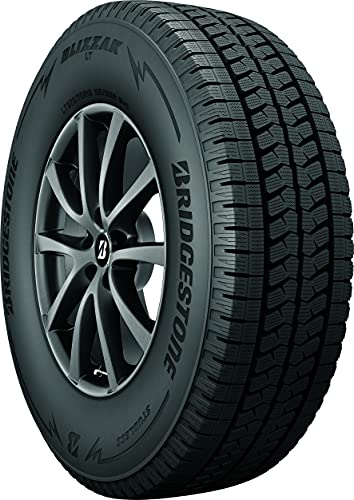
Bridgestone Blizzak LT Winter Tire
No 4WD mode adds braking or cornering grip on ice, so if the truck slides when you brake or turn, the tires are the fix. The Bridgestone Blizzak LT is a dedicated light-truck winter tire; buy four in your door-placard size and load range.
- • Tire Type: Dedicated Winter LT
- • Example Size: LT275/65R18 123R
- • Load Range: E
Four-wheel drive only helps your truck accelerate; it does nothing to shorten your stopping distance on slick winter roads. Installing a dedicated winter tire like the Bridgestone Blizzak LT addresses traction during braking and turning where transfer case modes are useless.
Because four-wheel drive systems require all four tires to have a matched rolling circumference to prevent driveline stress, you must replace all four tires together rather than putting winter tires on the drive axle only. A change in diameter is covered in larger tires: recalibrate or regear. Buy them in the size and load range on your door placard. Tire Rack or a local tire shop with mounting and balancing equipment is an equally practical place to buy.
When you need year-round all-terrain capability with snow certification

Falken Wildpeak A/T4W All-Terrain Tire
If you won't swap seasonal tires, an all-terrain with the snowflake mark is the compromise. Falken says the Wildpeak A/T4W earned USTMA's Three Peak Mountain Snowflake symbol, so confirm that mark on your size's sidewall.
- • Tire Type: All-Terrain
- • Example Size: LT275/70R18 125/122S
- • Load Range: E
If swapping seasonal winter wheel sets every spring and fall is not practical for your garage setup, an all-terrain tire with the 3PMSF mark is the usual alternative. Falken lists the Three-Peak Mountain Snowflake (3PMSF) symbol on its A/T4W page, which marks a tire that passed a standardized snow traction test, as described in the USTMA TISB 37 bulletin.
Keep your expectations realistic: while this all-terrain tire handles snow-covered pavement and slush well, it does not match the braking performance of a dedicated winter tire on glare ice. Make sure to confirm that the specific tire size you purchase matches the load range printed on your truck’s door jamb.
When 4L cannot crawl out of deep snowdrifts

MAXTRAX MKII Recovery Boards
When a heavy pickup bogs down in deep snow and high-centers its axles, recovery boards give the tires a high-friction ramp to climb out.
- • Genuine MKII
- • Part Number: MTX02
- • Color: Black
- • Includes: 2 boards and 2 leashes
When deep unplowed snow lifts your truck’s chassis and leaves your tires spinning without traction, more throttle only digs you in deeper. Placing MAXTRAX MKII recovery boards under the tires gives the tread something to bite.
MAXTRAX’s instructions lay out the order: stop, clear snow from around the tires and under the axles so the wheels carry the truck’s weight, and wedge the boards firmly against the tread in the direction you want to go. Then engage low range and first gear and accelerate gently. Don’t spin the wheels, because MAXTRAX says wheel spin can generate enough heat to melt the material and burn off the teeth, and it digs you in deeper. Recovery boards are an emergency extraction tool, not a substitute for proper winter-rated tires.
When snow packs beneath your truck’s frame

DMOS Delta Shovel (Regular)
A collapsible shovel with a steel blade lets you dig out packed snow from beneath your truck's undercarriage so the four-wheel drive system can regain traction. See specs on the DMOS official tool page.
- • Blade: 14-gauge carbon steel
- • Shaft: 6063 aluminum
- • Lengths: 51, 41, 29 in
- • Weight: 5.7 lb
Before 4L or recovery boards can do their jobs, you must clear the packed snow that collects underneath your truck’s lower control arms, differential housings, and transfer case skid plates. The NHTSA winter safety guidelines recommend keeping a sturdy snow shovel in your truck’s winter emergency kit.
The DMOS Delta Regular pairs a 14-gauge carbon steel blade with a 6063 aluminum shaft that sets at 51, 41, or 29 inches and collapses for storage in the cab or bed. The trade-off is weight: at 5.7 pounds it is no featherweight, and some owner reviews on the DMOS page mention push-pins that stick when you extend or collapse the handle. Digging out a path ahead of all four tires and clearing the undercarriage gives the tires a clear path forward.
Common winter 4WD mistakes and mechanical failure points
Knowing where your transfer case draws the line saves you from footing the bill for an avoidable driveline teardown.
The easiest mistake to make is leaving a part-time system locked in 4H once you pull off an unplowed side road onto a salted highway. The moment you steer through a tight cloverleaf off-ramp or turn into a gas station, the truck starts bucking because the transfer case cannot let the front and rear driveshafts turn at different speeds. That binding puts heavy strain right into your universal joints and axle shafts. GM manuals warn that extended driving in 4HI or 4LO on clean, dry pavement leads to front axle damage, excessive heat, oil seal leaks, and heavy tire wear.
Another quick way to hurt hardware is twisting the selector knob while your rear wheels are wildly spinning on an ice patch. Ford, Ram, and Toyota manuals explicitly order drivers to take their foot off the accelerator and wait for all wheel spin to cease before changing 4WD modes.
Low-range driving also requires attention to electronic safety systems. GM’s 2024 Silverado/Sierra 1500 manual says shifting into 4LO turns Traction Control and StabiliTrak off, Toyota’s 2023 Tacoma manual says VSC is automatically turned off in 4L, and Ford’s online F-150 manual says AdvanceTrac turns off its stability enhancement feature in 4L. Plan on driving low range without that safety net.
Toyota also includes a maintenance directive in the 2023 Tacoma manual and the 2019 Tundra manual: drive in four-wheel drive at least 10 miles each month so the front drive components stay lubricated.
Frequently Asked Questions
Can I drive on the highway in 4H?
On a snowy or icy highway, yes, but slow down. GM’s 2024 Silverado/Sierra 1500 manual names 4HI for snowy or icy roads and allows shifts between 2HI, AUTO, and 4HI at normal driving speed. Ram’s manual warns that because four-wheel drive provides improved traction, there is a tendency to exceed safe turning and stopping speeds, and says not to go faster than road conditions permit. NHTSA gives the same advice for winter roads: slow down and increase your following distance. If the highway is clear, dry, or only wet from rain, shift out of 4H to prevent driveline binding.
Will Auto 4WD hurt my fuel mileage?
Yes, slightly. GM manuals note that selecting AUTO results in slightly lower fuel economy than 2HI, and Ram manuals confirm lower fuel efficiency compared to 2WD because the front axle is engaged.
Does four-wheel drive help my truck stop on ice?
No. Four-wheel drive only supplies power to rotate the wheels forward. When you apply the brakes, all four wheels are already braking mechanically. Ford’s 2022 F-150 manual says a four-wheel drive vehicle won’t stop any faster than a two-wheel drive vehicle, so stopping on ice comes down to your speed and your tires.
Can I shift into four-wheel drive while driving?
Between 2H and 4H or Auto, yes, provided your wheels are not actively slipping: Ford at a stop or while driving, Ram stopped or moving, GM at normal speed, and Toyota below 62 mph. Into or out of 4L, no. Crawl or stop in Neutral (Ford 3 mph or less, Ram 2 to 3 mph or stopped, GM under 3 mph with 1 to 2 mph best, Toyota fully stopped with the brake held).
Should I use 4L to drive on icy roads?
No. 4L is engineered strictly for low-speed crawling in deep snow, steep off-road climbs, or vehicle recovery. The high gear reduction delivers heavy torque that can cause your wheels to break traction instantly on icy roads, and Ram caps 4L at 25 mph while GM caps 4LO at 45 mph.
Will driving in 4WD on dry roads damage my truck?
Driving in locked 4H or 4L on dry roads will cause driveline wind-up, tire scrub, and potential mechanical failure in your transfer case and differentials. If your truck has an Auto (4A) setting, Ford’s 2014 F-150 manual and Ram’s 2016 1500 manual allow that mode on dry roads, and Transmission Digest describes the F-150’s on-demand case as suitable for driving on dry pavement because its clutch pack can slip during turns.
Do I need to turn on 4WD periodically during the summer?
Toyota’s 2023 Tacoma and 2019 Tundra manuals say to drive in four-wheel drive for at least 10 miles every month to keep the front drive components lubricated. Check your vehicle’s owner manual to see if your manufacturer specifies a similar schedule.
Related winter truck guides
To set up your pickup for cold-weather reliability, see our related guides:
- Review our guide on comparing winter tires against tire chains and truck bed weight to see which traction upgrades make the biggest difference in braking performance.
- Learn about proper chain clearances, speed limits, and axle selection in our guide on the best snow chains for 4x4 trucks.
- Check our breakdown on pickup truck tire selection and sizing basics to understand load ranges and winter performance standards.
- Follow our guide on the best way to add weight to your truck bed to improve rear-axle bite over slippery roads without exceeding your suspension limits.
- Understand axle weight ratings before pulling a heavy winter load with our guide on payload versus towing capacity.
- Keep your engine starting smoothly during sub-zero cold snaps by checking our walkthrough on when to plug in a diesel block heater.
Sources
- Ford Motor Company: F-150 Online Owner’s Manual, Four-Wheel Drive Section (current web edition).
- Ford Motor Company: 2022 F-150 Owner’s Manual, Four-Wheel Drive, pp. 269-275.
- Ford Motor Company: 2022 F-150 Owner’s Manual, Reverse Braking Assist FAQ (traction control off in 4L), p. 295.
- Ford Motor Company: 2014 F-150 Owner’s Manual, Page 155.
- Ford Motor Company: 2022 Super Duty Owner’s Manual, Four-Wheel Drive.
- FCA US LLC: 2024 Ram 1500 Owner’s Manual (PDF).
- FCA US LLC: 2022 Ram 2500/3500 Electronic Transfer Case Operation.
- FCA US LLC: 2022 Ram 2500/3500 Manual Transfer Case Operation.
- FCA US LLC: 2016 Ram 1500 Owner’s Manual.
- General Motors: 2024 Chevrolet Silverado / GMC Sierra 1500 Owner Manual, Pages 234-235 (PDF).
- Toyota Motor Sales: 2024 Tundra Quick Reference Guide, Page 50 (PDF).
- Toyota Motor Sales: 2019 Toyota Tundra Owner’s Manual, p. 297.
- Toyota Motor Sales: 2023 Toyota Tacoma Owner’s Manual, Pages 303-305.
- Transmission Digest: Magna Powertrain Transfer Cases Part 2.
- Transmission Digest: BorgWarner 4417 Transfer Case: 2 for the Price of One.
- National Highway Traffic Safety Administration: Winter Driving Tips.
- U.S. Tire Manufacturers Association: Tire Information Service Bulletin 37 (PDF).
- MAXTRAX: Instructions for Use.
- DMOS: Delta Shovel tech specs.
More Featured Guides

Winter Tires vs Snow Chains vs Bed Weight: Which Pickup Traction Fix Should You Actually Use?
Compare dedicated winter tires, snow chains, and truck bed ballast. Learn the right traction fix for your pickup based on drivetrain, payload, and chain laws.
Read Guide
Leveling Kit vs Lift Kit: Which One Does Your Truck Actually Need?
Compare leveling kits and lift kits by goal, front suspension type, and real trade-offs, and learn what each one changes before you order parts.
Read Guide
Larger Tires on a Pickup: Recalibrate the Speedo, Regear, or Both?
Bigger tires throw off your speedometer and sap mechanical leverage. Here is how to decide whether your truck needs an ECM recalibration, an axle regear, or both.
Read GuidePatrick Kinsella
Off-road enthusiast and degreed mechanical engineer for over 15 years. Dedicated to helping you power up your rig for the ultimate adventure.