
Best Truck Mud Tires for Daily Driving and Off-Road Grip
The best truck mud tire for most daily-driven pickups is the Nitto Trail Grappler M/T because it balances real mud traction with better road manners than many aggressive mud-terrains. If your truck is a heavy diesel, start with the Toyo Open Country M/T in the correct LT load range. If the truck spends more weekends in ruts than weekdays commuting, the BFGoodrich Mud-Terrain T/A KM3 is the more serious off-road pick. Skip mud tires if the truck mostly sees pavement, rain, towing miles, or snow-packed roads.
Key Takeaways
- Mud tires are worth it only if your truck regularly sees mud, ruts, fields, trails, or loose off-road surfaces.
- For a daily driver, road noise, wet-road braking, tire weight, and rotation schedule matter almost as much as off-road bite.
- Heavy-duty diesel trucks need the right LT size, load index, load range, and inflation setup before any tread pattern matters.
- Big lugs do not make a tire a winter tire. For regular snow and ice, compare severe-snow-rated all-terrains or dedicated winter tires.
- We compared current manufacturer specs, retailer listings, fitment data, and practical truck use cases. We did not perform hands-on tire testing.
Quick Picks
Here is the short list before we get into the tradeoffs:
| Tire | Best For | Road Manners | Off-Road Strength | Watch-Out |
|---|---|---|---|---|
| Nitto Trail Grappler M/T | Daily-driven trucks that still need real mud bite | Better than most full mud tires | Mud, dirt, trails, and sidewall durability | Still heavy, still louder than an all-terrain |
| Falken Wildpeak M/T01 | Pavement-to-trail trucks | Good for a mud tire | Mud, rocks, rough trails | M+S rated, but not severe-snow rated |
| Toyo Open Country M/T | Heavy-duty diesel trucks and towing setups that go off pavement | Firm but predictable | Strong casing and deep mud/snow evacuation | Expensive; heavy sizes can dull acceleration |
| Thunderer Trac Grip M/T R408 | Budget mud tire for older trucks, farm use, and occasional mud | Rougher than premium picks | Wide lugs, many LT sizes | Not the refined choice for highway commuting |
| BFGoodrich Mud-Terrain T/A KM3 | Aggressive off-road use | Accept the noise | Mud, rocks, aired-down trails | Overkill for mostly paved driving |
| General Grabber X3 | Lifted trucks and mixed mud/dirt/rock use | Reasonable for the category | Mud, dirt, rock, three-ply construction | Ice and packed snow are not its best job |
That table is not a universal ranking. A tire that makes sense on a 2500 diesel with a service body can be a bad match on a half-ton that runs 70 miles of interstate every day. Start with fitment and load rating, then decide how much pavement compromise you are willing to live with.
Mud Tires Are a Compromise
Mud-terrain tires earn their keep when the tread can dig, clean itself, and keep pulling in soft ground. The big voids, shoulder lugs, and stronger sidewalls help in ruts, mud, dirt, rocks, and job-site slop.
That same tread pattern is the problem on pavement. Compared with highway or mild all-terrain tires, mud tires usually bring more noise, more weight, more fuel penalty, more uneven-wear risk, and less confidence in cold rain. If your truck spends 90 percent of its life commuting, towing on pavement, and carrying the family, a good all-terrain may be the better truck tire.
For the broader tire-choice basics, read how to choose pickup truck tires before buying a mud tire for looks.
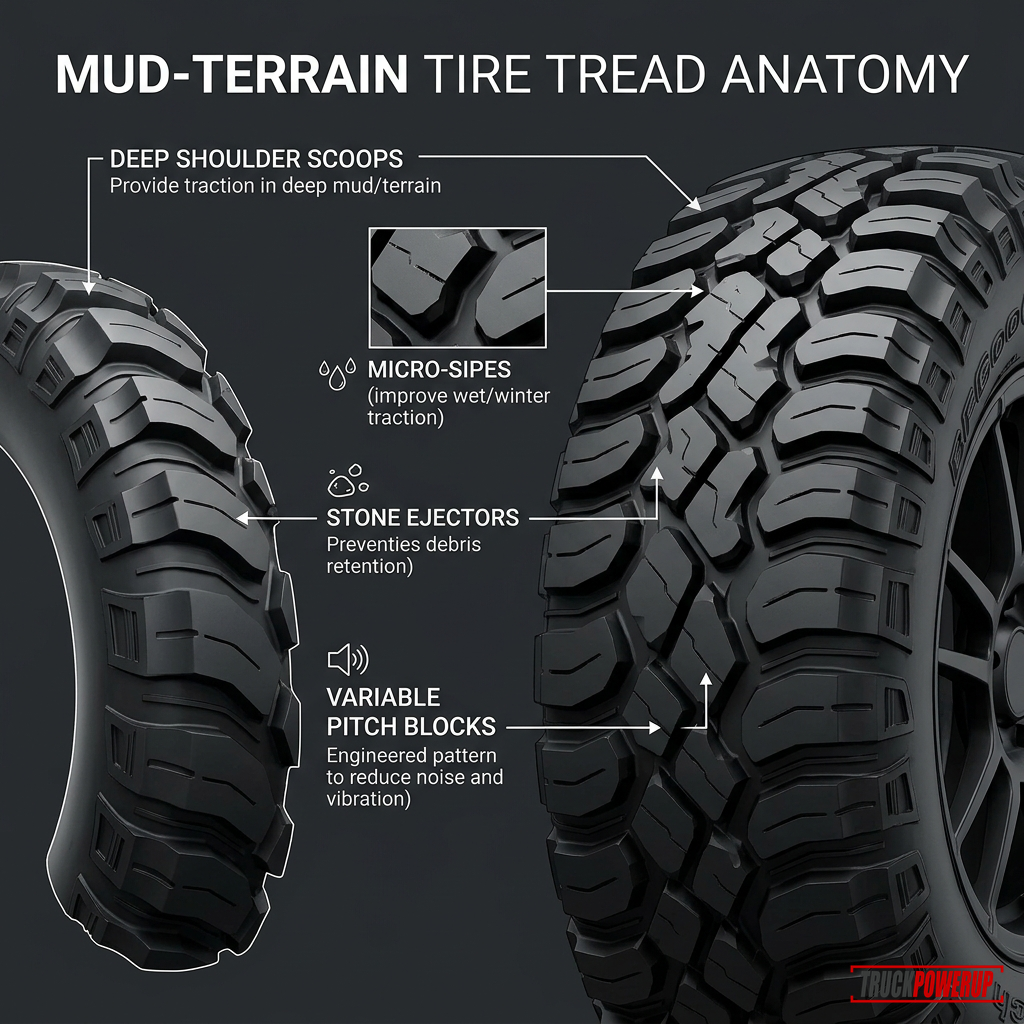
The Physics of Mud-Terrain Pavement Tradeoffs
Understanding the mechanical realities of mud tires on pavement explains why they perform differently:
- Tread Block Pitch Sequencing: The “harmonic hum” or road noise of an aggressive tire is caused by tread blocks striking the pavement at regular intervals. Premium daily-driver mud-terrain tires (like the Nitto Trail Grappler) use computer-modeled variable pitch sequencing—varying the sizes and angles of adjacent lugs—to scatter the sound frequencies and prevent loud, droning hums.
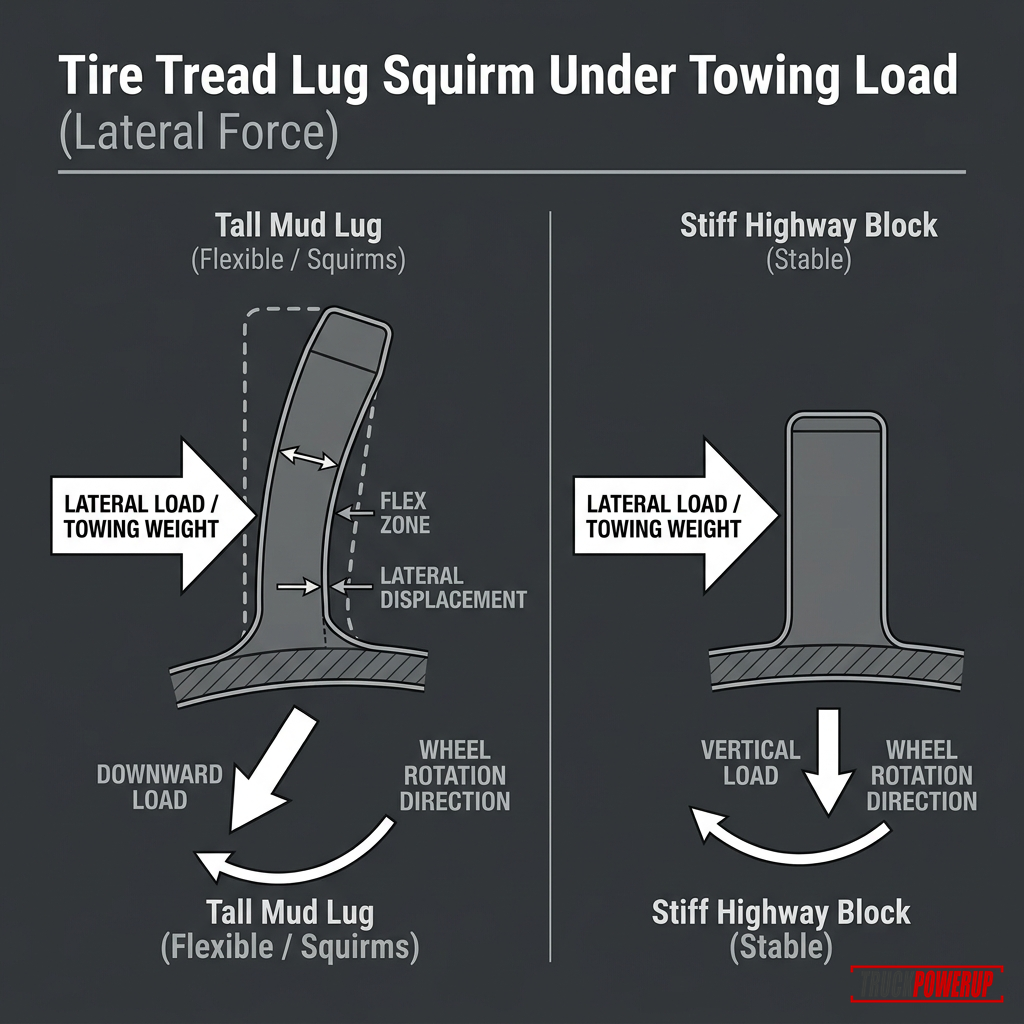
- Tread Lug Squirm: Mud tires have tall, flexible tread lugs with large gaps. When cornering, braking, or carrying heavy tongue weights on hot asphalt, these lugs flex laterally. This “lug squirm” causes a floating, less precise steering response compared to stiff-block highway tires.
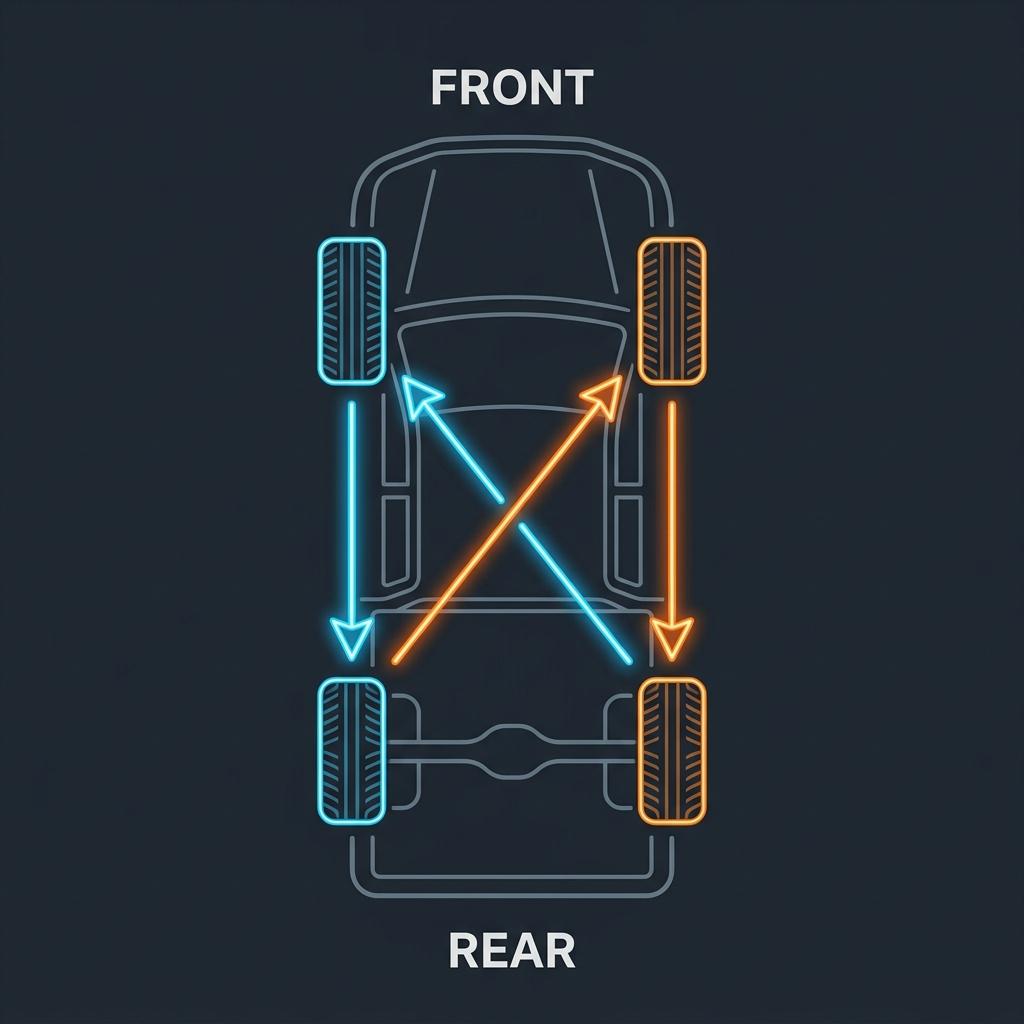
- Solid Axle vs. IFS Wear: Heavy-duty diesel trucks (like the Ram 2500 or Ford F-250) utilize solid front axles that experience unique lateral scrubbing forces during steering. This scrubs the outer edges of large mud lugs, causing severe “cupping” or uneven scallop wear unless tires are rotated in a strict forward-cross pattern every 4,000 to 5,000 miles. Midsize and half-ton trucks with Independent Front Suspension (IFS) are more prone to feathering along the inner tread blocks.
- Stone Drilling: Off-road driving wedges gravel into deep voids. If a tire lacks built-in stone ejectors (small rubber ridges at the bottom of the tread channels that flex to eject debris), those stones remain trapped. Over highway miles, the continuous compression can push the stone through the tread rubber into the steel belts—a failure mode known as “stone drilling.”
What to Look For in a Mud Tire
The useful stuff is not always the boldest part of the tread.
| Buying Check | Why It Matters | What to Do |
|---|---|---|
| Correct size | Protects clearance, ABS behavior, speedometer accuracy, and gearing | Start with the driver-door tire label and owner manual |
| Load index and load range | Keeps towing, payload, diesel weight, and accessories within safe limits | Match or exceed the required rating for your truck and load |
| Tire weight | Heavier tires can hurt braking feel, acceleration, and fuel economy | Compare weights before jumping to 35s or 37s |
| Tread void and shoulder lugs | Helps in mud, ruts, and loose dirt | Choose more void only if the truck actually sees those conditions |
| Siping | Helps wet-road and light-snow grip | Do not assume big blocks grip wet pavement well |
| Sidewall construction | Matters around rocks, stumps, roots, and aired-down trails | Look for reinforced sidewall designs when off-road abuse is real |
| Winter rating | M+S is not the same as severe-snow certification | For snowbelt use, check for 3PMSF or use dedicated winter tires |
NHTSA tells drivers to use the vehicle manufacturer’s recommended tire size and pressure from the owner manual or the driver-side label, not the maximum pressure molded into the tire sidewall. Its TireWise guidance also says tires are unsafe once tread is worn to 2/32 inch and should be checked monthly: NHTSA tire safety.
Best Mud Tires by Use Case
Think in use cases, not trophies. These are the situations where a mud tire can make sense.
| Use Case | Better Tire Direction | Why |
|---|---|---|
| Daily driver with hunting roads, fields, and muddy access roads | Quieter mud-terrain (Nitto Trail Grappler) or aggressive alternative (Falken Wildpeak) | You need bite, but pavement still dominates |
| Diesel truck with trailer, tools, or service body | LT mud-terrain with the correct load index (Toyo Open Country M/T) | Heavy trucks punish weak sidewalls and under-rated tires |
| Lifted show-and-use truck | Size-appropriate mud-terrain with careful fitment (General Grabber X3) | Rubbing, gearing, braking, and speedometer error can stack up fast |
| Farm, ranch, or older work truck | Budget mud-terrain if highway refinement matters less (Thunderer Trac Grip) | Value matters when the truck lives in dirt and gravel |
| Dedicated trail rig | Aggressive mud-terrain (BFGoodrich KM3) | Road noise is less important than bite and sidewall protection |
| Snowbelt commuter | Severe-snow-rated all-terrain or winter tire | Mud lugs do not equal ice grip |
If you are upsizing tires, plan the calibration too. Taller tires can throw off the speedometer and odometer; use the make-specific guide for Chevy/GMC, Ford F-150, or Ram before assuming the truck will correct itself.
Best for Daily-Driven Trucks: Nitto Trail Grappler M/T
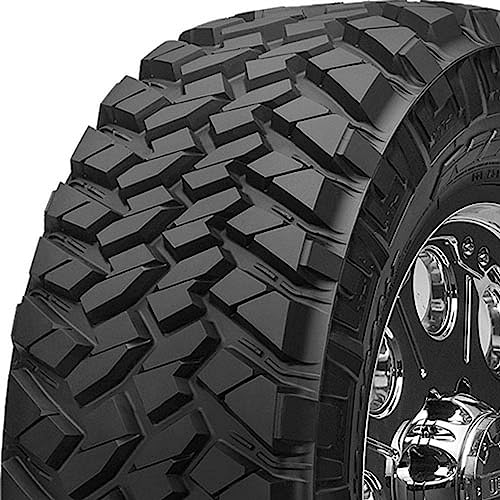
Nitto Trail Grappler M/T
Best for: Pickup owners who really use mud tires but still drive to work, tow lightly, or run highway miles between trails.
- • Best daily-driver mud tire pick
- • Strong off-road bite with better road manners than many aggressive M/Ts
- • Check exact LT size, load range, and wheel fitment
- • Skip if most driving is wet pavement or snow-packed commuting
Why it made the list: Nitto positions the Trail Grappler M/T as a mud-terrain with on-road comfort in mind. Nitto says the tire uses adjusted tread-block size, shape, and placement to reduce noise compared with its Mud Grappler, while still using a reinforced sidewall and aggressive tread for off-road use.
Road manners: This is the mud tire I would compare first if pavement is still part of the truck’s real life. It will not be as quiet as a highway tire or mild all-terrain, but the tread design is less of a one-note trail tire than the most aggressive options.
Off-road strength: The Trail Grappler has enough void, shoulder, and sidewall bite for muddy access roads, hunting trails, and rutted work-site use. It is a better fit for a truck that actually leaves pavement than for a truck that only wants the look.
Watch-outs: It is still a heavy, aggressive mud tire. Expect more hum, more rotation discipline, and a worse wet-road compromise than a less aggressive tire. If the truck sees mostly rain and pavement, step down to an all-terrain.
Fitment/load note: Check the exact size for load index, load range, rim width, and overall diameter. A half-ton on factory wheels has different needs than a diesel 2500 on 35s.
Best Road-Manner Mud Tire Alternative: Falken Wildpeak M/T01

Falken Wildpeak M/T01
Best for: Trucks that split time between pavement, mud, rocks, and rough roads, especially when the owner wants a tougher tire without going straight to the loudest option.
- • Good road-manner alternative among mud terrains
- • Three-ply DURASPEC sidewall noted by Falken
- • M+S rated, but Falken says it does not carry the severe-snow 3PMSF mark
- • Check load range and exact size before ordering
Why it made the list: Falken says the Wildpeak M/T uses three-ply DURASPEC sidewall technology and notes that the tire is M+S rated but does not carry the severe-snow 3PMSF marking like some Falken all-terrains. That honesty matters for daily drivers in cold states.
Road manners: For a mud-terrain, the Falken is a sensible cross-shop against the Nitto. It is still an M/T, so do not expect highway-tire quiet, but it is not positioned as a trailer-only trail tire.
Off-road strength: The sidewall construction and upper-sidewall design make sense for sharp gravel, rock edges, low-speed trail work, and muddy roads.
Watch-outs: M+S on the sidewall does not make it the right tire for ice. If the truck sees regular winter highways, compare a severe-snow-rated all-terrain before committing to this.
Fitment/load note: Falken offers multiple LT sizes and load ranges. Verify your chosen size against payload, towing, and rim-width requirements.
Best for Heavy-Duty Diesel Trucks: Toyo Open Country M/T

Toyo Open Country M/T
Best for: Three-quarter-ton and one-ton trucks that tow, haul, work off pavement, or carry heavy accessories but still need mud-terrain bite.
- • Best heavy-duty diesel mud tire pick
- • Strong casing and aggressive shoulder design
- • Better for trucks that actually work off pavement
- • Verify LT size, load index, load range, and wheel rating
Why it made the list: Toyo’s Open Country M/T has a long reputation in the heavy-truck world because it combines aggressive tread with a high-turn-up three-ply polyester casing. Toyo also calls out hook-shaped tread blocks, open scalloped shoulders, over-the-shoulder tread, and deep siping.
Road manners: It is not a quiet commuter tire, but it is stable enough to make sense on trucks that do real work. On a heavy diesel, that stability matters more than saving a few dollars.
Off-road strength: The open shoulder design is useful in mud and snow-covered dirt roads, and the casing makes sense around heavy trucks that see gravel, field entrances, and trailer duty.
Watch-outs: Big Toyo M/T sizes are heavy and expensive. They can make a truck feel slower, can increase braking demand, and can be harsher unloaded. If your diesel mostly tows on pavement, a highway or all-terrain tire may be smarter.
Fitment/load note: Diesel owners need to check load index, load range, axle ratings, wheel rating, and inflation pressure. The rear axle and trailer tongue weight matter here.
Best Budget Mud Tire: Thunderer Trac Grip M/T R408
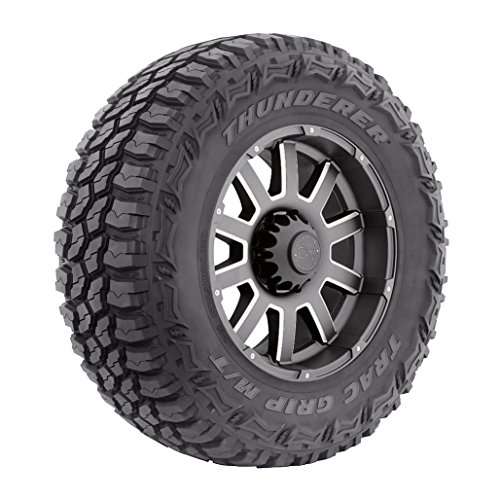
Thunderer Trac Grip M/T R408
Best for: Older pickups, farm trucks, trail spares, and budget builds where off-road traction matters more than premium highway refinement.
- • Budget mud-terrain option
- • Useful for older work trucks and farm use
- • Many LT sizes listed in Thunderer catalogs
- • Less refined than premium highway-friendly mud tires
Why it made the list: The Trac Grip M/T R408 still shows broad LT size coverage at a lower buy-in than many premium mud-terrains. Thunderer’s catalog lists many R408 sizes with 19/32 to 21/32 tread depth and load ranges that include C, D, E, and F depending on size: Thunderer product catalog.
Road manners: Expect more noise, more balancing sensitivity, and less polish than the premium picks. That may be fine on a truck that spends more time around fields, gravel, and firewood than long interstate trips.
Off-road strength: The R408’s value is simple: wide mud-terrain lugs at a lower buy-in. That can be enough for an older Silverado, Ram, Tacoma, Ranger, or farm truck that gets stuck in soft ground.
Watch-outs: Budget mud tires are where you need to be strict about installation quality. Have them mounted and balanced by a shop that can handle larger LT tires, rotate them often, and watch for uneven wear.
Fitment/load note: Do not assume the cheap size is the correct size. Match load index and speed rating to the truck, especially if it tows or carries weight.
Best Aggressive Off-Road Tire: BFGoodrich Mud-Terrain T/A KM3

BFGoodrich Mud-Terrain T/A KM3
Best for: Trucks and SUVs that spend enough time in mud, rocks, and aired-down trail use to justify a more focused tire.
- • Best aggressive off-road pick
- • Strong mud, rock, and aired-down trail focus
- • BFGoodrich highlights CoreGard Max and Krawl-TEK features
- • Overkill for mostly paved daily driving
Why it made the list: BFGoodrich built the Mud-Terrain T/A KM3 around off-road grip. Its product page calls out Terrain-Attack tread blocks, Mud-Phobic bars meant to release packed mud, Krawl-TEK compound, Linear Flex Zone behavior when aired down, and CoreGard Max sidewall technology.
Road manners: This is the wrong pick if quiet pavement manners are your first priority. It can be driven on the road, but the point of the KM3 is traction and toughness off pavement.
Off-road strength: Deep mud, loose dirt, slick rock, and aired-down trail work are where the KM3 belongs. If you bought lockers, armor, recovery gear, and a real winch, this tire fits that style of build better than a mild all-terrain.
Watch-outs: For mostly paved trucks, it is overkill. Wet pavement and winter roads still deserve respect. Big tread blocks can look confident while giving you less grip than expected on cold, slick surfaces.
Fitment/load note: Check sidewall, wheel width, speed rating, and load index by exact size. Aggressive off-road tires often push owners into larger diameters, and larger diameters can require trimming, re-gearing, or speedometer calibration.
Best for Lifted Trucks: General Grabber X3

General Grabber X3
Best for: Lifted trucks that see a real mix of mud, dirt, and rock, and owners who want a tire that still tries to keep pavement tolerable.
- • Good lifted-truck mud tire candidate
- • General highlights three-ply durability and sidewall protection lugs
- • Built for mud, dirt, and rock
- • Verify offset, clearance, gearing, and calibration on larger sizes
Why it made the list: General describes the Grabber X3 as a mud-terrain built for mud, dirt, and rocky terrain with three-ply durability, sidewall protection lugs, a multi-pitch pattern, and siped tread design. Tire Rack’s product description also notes evacuation channels, stone bumpers, and a three-ply casing.
Road manners: A lifted truck already has more wind noise, altered geometry, and heavier rotating parts. The Grabber X3 is still a mud tire, but it is not a bad cross-shop when you want aggression without ignoring pavement entirely.
Off-road strength: Mud, rock, dirt, and aired-down sidewall bite are its lane. It makes more sense on a truck that actually uses the lift than a truck that only sits taller.
Watch-outs: Do not treat this as an ice tire. Mud-terrain tires can be branded M+S and still disappoint on packed snow and freezing rain.
Fitment/load note: Lifted trucks need extra fitment homework: wheel offset, fender liner clearance, crash-bar clearance, spare-tire fitment, gearing, and speedometer calibration.
Load Ratings and Fitment Notes
Mud tires get expensive enough that people sometimes shop by price first. Do the boring checks before the cart.
Match the Truck’s Required Load
Half-ton pickups, three-quarter-ton diesels, and one-ton work trucks are not asking the same job from a tire. A 35-inch mud tire can be available in multiple load ranges, and the lower-rated one is not automatically acceptable just because it fits the wheel.
Check these before ordering:
- Driver-door tire and loading label.
- Owner manual tire section.
- Tire manufacturer’s size/load table.
- Wheel load rating.
- Rear axle rating if the truck tows or hauls.
- Trailer tongue weight and normal cargo weight.
If you add winter ballast, a topper, bed drawers, a steel bumper, or recovery gear, that weight also matters. Our guide to how much weight to add to a truck bed explains why payload disappears faster than most owners expect.
Plan for Bigger-Tire Side Effects
Going from a factory 31- or 32-inch tire to a 35- or 37-inch mud tire can change more than the look.
| Change | What Can Happen |
|---|---|
| Taller diameter | Speedometer error, altered shift points, gearing change |
| Wider tread | Rubbing on control arms, crash bars, mud flaps, or fender liners |
| Heavier tire | Slower acceleration, more brake demand, lower fuel economy |
| More aggressive lugs | More road noise and possible uneven wear |
| Different load range | Firmer ride and different inflation needs |
If the truck is lifted or leveled, do not trust one-size-fits-all forum answers. Measure your truck, check wheel offset, and talk to a tire shop that has mounted that size on your generation of truck.
Where to Buy and Install Mud Tires
Buying a set of mud-terrain tires is different from buying regular accessories. A single mud-terrain tire can weigh anywhere from 50 to 90 pounds, meaning shipping, handling, and mounting are major parts of the total cost.
Here is how the main purchasing options compare:
Dedicated Online Tire Retailers (Tire Rack & Discount Tire)
For most truck owners, buying through a dedicated online distributor like Tire Rack is the safest balance of price and convenience:
- The Pros: They carry extensive inventory of specific light-truck (LT) sizes and load ranges. They offer free shipping directly to a local, pre-vetted partner tire shop in your area, and they automatically bundle free 2-year road hazard protection with most tire models.
- The Cons: You still have to pay the local shop for mounting and balancing, and returning a tire you ordered in the wrong size requires paying heavy return freight costs.
- The Inside Tip: Use their installer networks. Since the tires ship straight to the shop, you don’t have to load four massive mud tires into your truck bed and haul them to a shop yourself.
Amazon
Amazon is a viable option for checking prices, but it requires caution:
- The Pros: If you have Prime, shipping is free, and you can occasionally find sellers discounting specific sizes to clear inventory.
- The Cons: Most tires on Amazon are sold by third-party distributors. Stock is highly volatile, meaning you might find three tires in stock but not a complete set of four. Furthermore, Amazon does not have a seamless network of local installer partners, and returning a 70-pound tire due to ordering the wrong load index can be extremely difficult.
- The Inside Tip: Only buy from Amazon if the seller is reputable and you have already confirmed a local shop will mount tires you bring in yourself (some chain shops refuse to mount customer-supplied tires).
Local Tire Shops
Supporting your local brick-and-mortar tire shop is often the best choice for installation and long-term service:
- The Pros: They handle everything from ordering to mounting. If a tire arrives out-of-round (which can cause severe highway vibrations in big mud tires), the shop handles the replacement. They also make tire rotations and warranty claims simple.
- The Cons: Upfront tire prices may be slightly higher than online warehouses.
- The Inside Tip: Ask for a Road Force Balance. Heavy mud-terrain tires have stiff casings and large lugs. Standard spin balancers often miss heavy spots that lead to highway steering wheel shake. A road force balancer presses a roller against the tread to simulate the weight of the truck, ensuring the tire is perfectly matched to the wheel.
Common Mistakes
Buying Mud Tires for the Look
Mud tires look right on a truck. That does not mean they fit your driving. If the truck mostly runs pavement, rain, towing trips, and school pickup, the tire may make the truck worse at the work it actually does.
Forgetting Wet Pavement
Deep lugs clear mud. They do not automatically stop well in rain. Independent wet-braking tests from Tire Rack show that mud-terrain tires can take up to 20 to 30 additional feet to stop from 50 mph on wet asphalt compared to a standard highway or mild all-terrain tire. Leave extra following distance after switching tires, especially during the first storm.
Treating M+S as a Snow Guarantee
M+S means mud and snow, but it is not the same as the three-peak mountain snowflake severe-snow rating. NHTSA’s winter guidance reminds drivers to slow down and increase following distance because slick roads make vehicles harder to control or stop: NHTSA winter driving tips.
Ignoring Rotation
Mud tires can cup, feather, and grow louder if you ignore rotation. A 5,000-mile rotation interval is a sensible starting point for many trucks, but follow your tire and vehicle guidance.
Over-Tiring a Tow Rig
If towing stability matters, do not jump to a heavier, wider, more aggressive tire without thinking through load, pressure, sidewall stiffness, and braking. A tire that looks tougher can still make the truck feel worse with a trailer attached.
Upsizing Without Calibration
If the tire diameter changes, plan the speedometer correction. Otherwise you may be driving faster than the dash says, logging wrong mileage, and changing transmission behavior.
FAQ
What is the best mud tire for a daily-driven truck?
The Nitto Trail Grappler M/T is the best starting point for many daily-driven trucks because it balances off-road bite with more attention to on-road comfort than harsher mud tires. If most of your driving is paved, also compare aggressive all-terrains before committing to a mud tire.
Are mud tires good in rain?
Some mud tires are acceptable in rain, but they are usually not as confidence-inspiring as highway or all-terrain tires on wet pavement. Big tread voids help clear mud, not necessarily stop quickly on slick asphalt.
Are mud tires good in snow?
They can work in loose snow, but they are not automatically good winter tires. Packed snow, ice, and freezing rain are different problems. For regular winter driving, look for severe-snow-rated tires or dedicated winter tires.
What mud tire is best for a diesel truck?
The Toyo Open Country M/T is a strong heavy-duty diesel pick when the truck genuinely needs mud-terrain traction. The exact size and load rating matter more than the brand name, especially with trailer tongue weight or tools in the bed.
Are mud tires louder than all-terrain tires?
Usually, yes. Mud tires have larger tread blocks and voids, which tend to create more road noise. Some designs manage noise better than others, but a quiet mud tire is still usually louder than a mild all-terrain.
How often should I rotate mud tires?
Start around every 5,000 miles unless the tire or vehicle manufacturer gives a different schedule. Rotate sooner if you see cupping, feathering, or uneven wear.
Do I need to recalibrate my speedometer after larger mud tires?
Yes, if the overall tire diameter changes enough to affect the speedometer. Larger tires travel farther per wheel rotation, so the truck may be moving faster than indicated.
Related Tire Guides
Going up a size with your mud tires? Larger tires: recalibrate, regear, or both covers the speedometer and gearing side.
- How to choose pickup truck tires
- How much weight to add to a truck bed for winter traction
- How to calibrate a Chevy speedometer for larger tires
- How to calibrate a Ford F-150 speedometer for larger tires
- How to calibrate a Ram speedometer for larger tires
- Tailgate ladders and truck bed steps
Sources Checked
- Nitto Trail Grappler M/T
- Falken Wildpeak M/T
- Toyo Open Country M/T
- Thunderer PLT Catalog
- BFGoodrich Mud-Terrain T/A KM3
- General Grabber X3
- NHTSA tire safety
- NHTSA winter driving tips
- U.S. Tire Manufacturers Association (USTMA) Drivetrain Rules
- Tire Rack Wet-Braking Performance Comparisons
More Featured Guides

Best Shocks for Pickup Trucks: Stock, Towing, Off-Road, and Lifted Setups
Choose pickup truck shocks by ride height, towing load, tire weight, road use, and exact fitment. Compare Bilstein, Rancho, KYB, and premium off-road options.
Read Guide
Best Shocks for Dodge Ram 1500 4x4: Leveling, Towing, and Daily Ride
A practical Dodge Ram 1500 4x4 shock guide covering Bilstein 5100 leveling shocks, Rancho RS9000XL adjustability, stock-height replacements, coil-spring rear suspension, and fitment checks.
Read Guide
Best Snow Chains for 4x4 Trucks: Fitment, 4WD Placement, and Winter Traction
Choose snow chains for a 4x4 truck by tire size, clearance, chain law, axle placement, and how much snow or ice you actually drive through.
Read GuideKelley Crush
Kelley is a mechanical engineer and a truck enthusiast. He's currently an F-250 guy, but he promises to respect any well-equipped and properly utilized truck.